Civilian FPV & drone sports components
Technical SupportContact Sales Global · English

OEM and ODM · Brand presentation

Make the package match the product inside.

Logo and packaging work begins after the ordered hardware and variant are defined. A branded box is useful when it helps a buyer identify the correct component, understand its limits and replenish it consistently. It creates risk when artwork promises features or approvals that the specific product has not demonstrated.

Sichuan Yuanxin Supply Chain Technology Co., Ltd. discusses private label presentation for drone components and systems. This page helps distributors, schools, clubs and brands prepare an artwork brief and approval process. Materials, printing methods, MOQ and lead time need confirmation for the chosen product and order.

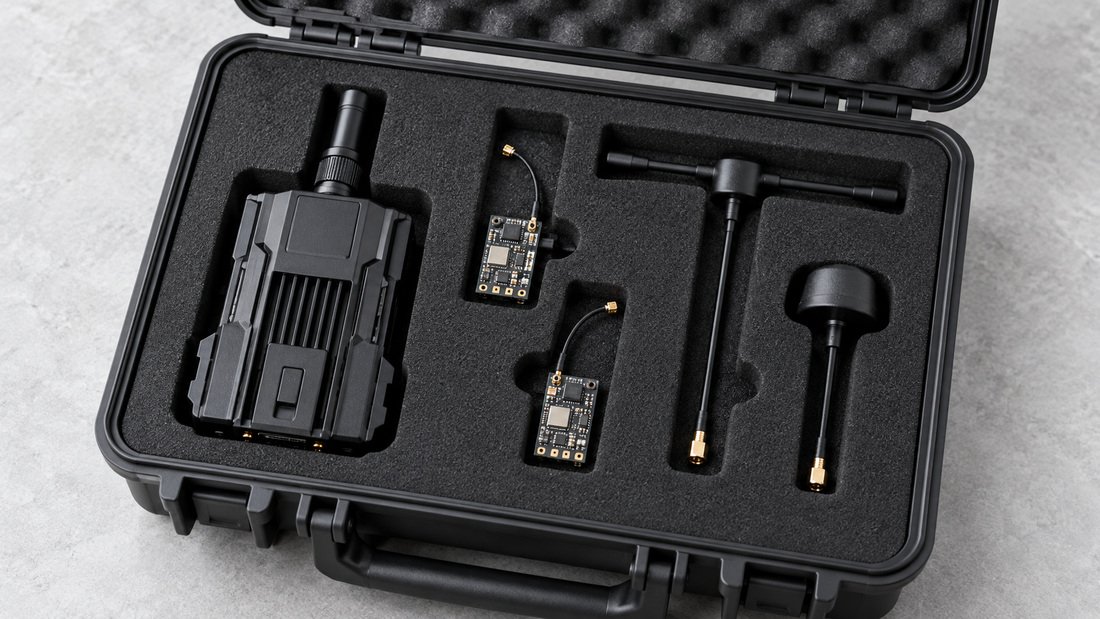
Drone radio component kit arranged for product presentation
Use as a component illustration; confirm kit contents before describing a retail package.

Fix the product first

One product identity from sample to carton

Before a designer places a logo, the project needs an exact SKU and variant: model name, technical revision, connector, frequency, firmware, color, included accessories and the intended market. Packaging cannot resolve ambiguity in the underlying product.

For an ExpressLRS receiver, a pack should distinguish the operating band and antenna or connector variant. For an FPV video antenna, it should identify the intended video frequency and physical connector without implying it is a control link antenna. For a motor, the buyer may need a winding or KV code, shaft, mounting and other actual variant information. For a drone soccer package, the buyer must know whether it includes one or more aircraft, batteries, controllers, chargers, spare shells or tools.

Build an order map connecting the internal model, customer-facing product name, barcode if used, artwork revision and physical box. A distributor may choose a consumer-friendly name, but support and fulfillment still need a traceable technical identifier. If the hardware changes, decide whether the packaging copy or barcode must change. A familiar box should never conceal a substitution that affects the buyer's application.

Establish the destination market early. Required languages, warnings, battery information, importer details and markings can vary. This page does not assert that a particular package design meets any jurisdiction's rules. Ask the buyer's responsible specialist to approve legally required text and claims. The supplier should confirm what it can print and how artwork proofs are approved.

Create a useful brief

List every surface and document that must be designed

Give the exact product dimensions and intended package format. A small receiver might use a protective pouch and label; a drone soccer kit may need a carton with separate spaces for aircraft, controller, batteries and charger. Specify the number of units per retail pack and shipping carton, the desired protection and the unpacking experience. If a school will store equipment between lessons, consider whether reusable containers or clearly marked parts are more useful than decorative packaging.

Provide brand assets in an editable format, color references, typography requirements, product photography, barcode data and approved copy. State who owns each image and trademark. If the supplier is asked to create a mockup, decide whether the deliverable is a digital layout, printed proof or production sample. A screen preview cannot reliably show final material, color, fold or label placement.

Include user information with the package design. Setup instructions, wiring diagrams, warnings, battery handling, firmware update route and customer support details may be more important than marketing statements. Write for the actual reader: a distributor's warehouse worker, school instructor, hobbyist builder or integrator. Avoid tiny technical text on a box when a clear insert or online guide is needed. Link a QR code only to a stable, maintained destination and provide an alternative path if the code cannot be scanned.

Finally, define artwork ownership and updates. Will the buyer receive print-ready files, editable source files, dielines or only printed goods? Who stores the approved version, and who may order a reprint? Document a clear approval contact. Packaging can be reused across production runs only if someone checks that the printed claims still match the current hardware.

Packaging inquiry checklist

  1. Exact product, variant and included accessories.
  2. Target market, languages and required legal text.
  3. Brand files, photographs and rights to use them.
  4. Retail pack and shipping carton requirements.
  5. Proof type, quantity and approval contact.

Artwork gates

From brief to approved production proof

01

Product lock

Confirm the sample and technical variant. Write a controlled list of contents. Identify claims that require evidence. If hardware is still changing, mark the artwork as preliminary and avoid ordering printed stock that may become inaccurate.

02

Structure

Choose pack size, inserts, protection and carton count around the actual goods. Check fit with a real sample and accessories. A box that looks efficient in a drawing may crush an antenna lead or leave a battery insufficiently protected in the agreed shipping configuration.

03

Copy and images

Review model name, specifications, warnings, included items, product photos, setup steps and support contact. Ensure the selected image depicts the offered configuration. The buyer's legal and technical reviewers should approve claims before final layout.

04

Proof

Check a digital proof for spelling and layout and a physical proof where material, color or fit matters. Compare barcode scanning, label position and the real product inside. Record approval against an artwork revision rather than an informal screenshot.

05

Print release

Agree on quantity, production date, acceptable color tolerance and treatment of unused custom material. Confirm the technical product revision still matches the package. Any last-minute change should be reflected in a new approved proof.

06

Incoming check

Check printed packs against the proof and verify that goods are packed under the correct model. Record carton and lot information if agreed. Keep a sample of the final pack for later reorders and customer support.

Audience-specific choices

Design for how the buyer will use the package

Distributors: A range of similar receivers or antennas needs visible, consistent variant coding. Warehouse staff may handle many configurations in one day. Put the differentiating attribute where they can find it without opening the pack. Product photos should be accurate and not substituted from an adjacent model. For a retail partner, agree on barcode data, case pack and documentation for returns.

Private label brands: Maintain one approved source of claims and assets. The brand owner should approve trademark usage, public specifications and manual language. If the electronics change, the design owner and the brand owner need a process for updating the printed description. An impressive box is not a substitute for a stable product revision and an after-sale contact route.

Schools and clubs: Durable identification and storage may matter more than premium finishes. Color coding can help instructors return the right battery, controller or spare to the correct kit, but color must not replace a written model label where technical compatibility matters. Include plain setup and safety instructions. Consider whether spare parts should have independent labels to simplify replenishment.

System integrators: A plain, traceable pack may be preferable to a retail display. Identify the PCB or assembly revision, ESD protection if relevant, included harnesses and inspection data specified in the order. Avoid claiming a full aircraft certification on a component package. If the buyer incorporates the part into another product, agree which labels will remain visible.

Cross-border shipments: The inner product package and outer shipping carton may have different roles. Batteries and other regulated goods require a shipment-specific documentation and packaging review. The shipping company and responsible specialists should confirm the applicable requirements for the exact goods and route. A decorative mark on a retail box does not satisfy transport obligations.

Claims and corrections

Write what can be supported

“Long range,” “compatible with all drones,” “certified” and “ready to fly” can be misleading when used without scope. If a range figure is proposed, identify the equipment and conditions behind it. If compatibility is listed, name the tested models and revisions. If a certificate is cited, check that it belongs to the exact configuration and market. If a kit is described as ready to fly, check all required items and setup steps. The packaging designer should be able to trace every technical statement to a product owner or approved document.

Set a correction process for errors found after print. Determine whether goods can be relabeled safely and legally, whether an insert is sufficient, or whether a batch must be held. Track which carton and product lots carry the affected artwork. An artwork file alone does not reveal how many printed boxes are in circulation. Good version control reduces waste and protects the buyer's customer.

Ask for a final assembled sample before a large private label launch. Open it as a customer would, confirm contents and read the instructions in context. Test QR codes and email addresses. Check whether the images and color match the actual product. Use feedback to revise the package before approving replenishment, not to silently substitute a new design into an old order.

Commercial terms for artwork, plates, tooling, mockups, unused printed material and reprints vary. Put them in the quotation. Do not assume that one MOQ or lead time applies to every color, box structure and print method. A technical product may be available sooner than its custom carton, or the reverse; plan the complete shipment rather than a single production step.

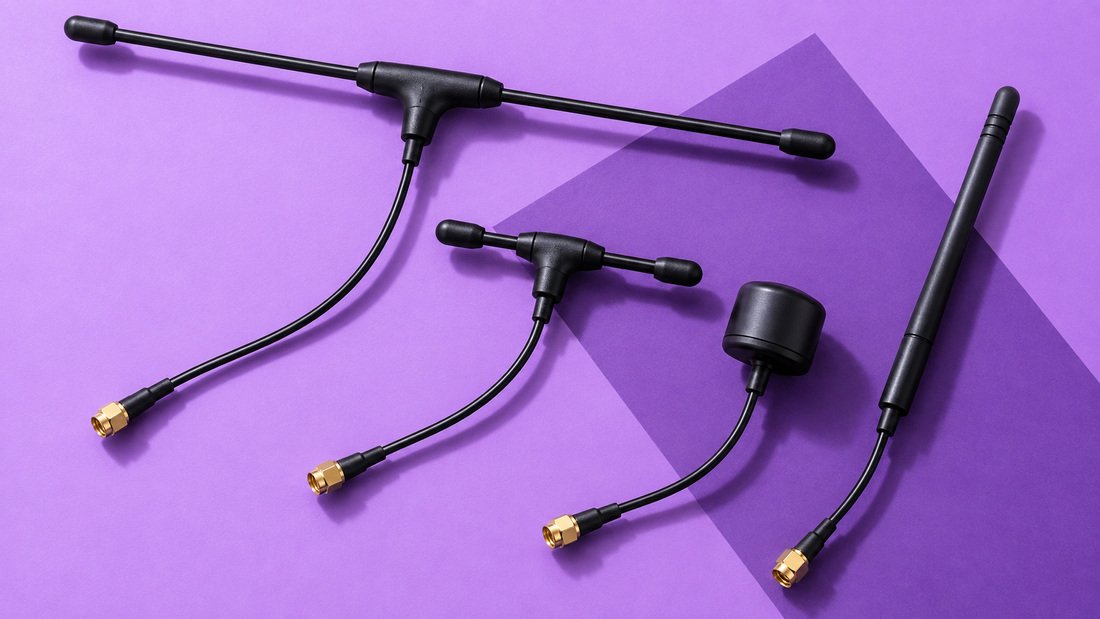
Assorted antenna components shown as a product-family illustration
Illustrative assortment only; list actual pack contents separately.

Product-specific proofing

Check the details that matter to each kind of kit

For a small RF receiver, check that the antenna or cable is protected and that its connector is not pressed against a rigid edge. The label should state the correct band and variant in a way that can be read before the sealed pack is opened. If the product can be updated, the instruction insert should explain where the buyer finds current firmware guidance without asserting that every firmware release is compatible.

For an FPV electronics board, determine whether it is packed bare, in an antistatic protective material, or with a harness and hardware. The chosen method should suit the actual board and transport path. A printed pinout is especially useful when a buyer will install the board, but it must match the board revision inside the pack. A beautiful diagram from an earlier PCB can create a costly wiring error.

For a propulsion kit, count every motor, ESC, propeller, fastener and cable against the quoted contents. Mark any handed or rotation-specific items clearly. Do not use one set of performance figures for several propeller and battery combinations. A customer should be able to distinguish the physical kit from an illustration of a complete drone that is not included.

For a drone soccer system, unpack the proposed kit in a teaching scenario. Can an instructor identify which charger belongs to the battery? Is a protective shell packed without stress on a fragile part? Are spares listed and easy to reorder? If a package is intended for a club, test whether equipment can be returned to storage in a way that supports quick checks before the next session.

For a mixed distributor range, perform a shelf and warehouse review. Put several similar boxes side by side, then ask a person unfamiliar with the product to pick the right variant from an order line. If the answer depends on opening the pack or guessing from a photograph, revise the label. This exercise also tests whether the online product title, invoice description and carton text refer to the same item.

Packaging approval should include a simple language check with a real buyer. Ask whether they can find the exact model, variant, key limits and support route without opening multiple web pages. A professional designer can make a box attractive while an installer still misses the connector specification. A brief shelf test and an unpacking test expose different problems. Record the corrective changes in the artwork revision and recheck the final physical proof before stock is released for shipment.

Frequently asked questions

Logo and packaging customization questions

Can my logo be added to an existing product?

Ask about the exact model and quantity. Logo placement may be possible on the product, a label, manual or box, but each has different material and process limits. Confirm the artwork format, trademark rights, proof and durability requirements. A logo change does not automatically alter product performance or technical ownership.

What files should I send for a packaging quote?

Send the exact product and accessory list, target market, pack quantity, dimensions if known, brand assets, approved copy and desired material. Identify required warnings and languages. If the product is not finalized, explain which specifications remain provisional. Request the proof type and expected deliverables in the quote.

Can the box say the product is certified?

Only if the claim accurately matches current evidence for the exact product, variant, market and certification scope. Provide the document and have the responsible team approve the wording. Do not copy a mark from another model or assume that a supplier's general company statement covers a new branded product.

Who writes setup instructions?

Define that responsibility in the project scope. The technical product owner should verify wiring, firmware, warnings and included items; the brand owner may approve voice and language. Ask whether translation and layout are included. Test the instructions with a representative user before printing a large quantity.

Do you offer a minimum packaging order quantity?

No universal minimum is supported by the supplied information. Quantity depends on the box structure, material, print method, color, artwork and product. Request a specific quote that separates sample proof, setup cost, print quantity and product assembly. Consider the cost of unused branded materials if a model changes.

What is the difference between a digital and physical proof?

A digital proof helps review text, alignment and basic visual layout. A physical proof allows evaluation of material, folding, fit, label position and approximate printed color. Neither verifies that the technical claims are true. For a new kit, review a fully packed sample with the actual goods and accessories.

Can one box be used for several variants?

Possibly, if a controlled label or insert clearly distinguishes each configuration and the common text remains accurate. Avoid a universal claim that is true for one variant but false for another. Warehouse staff should be able to identify the contents without guesswork, and the buyer should agree on the model map and inspection step.

Should a school kit use reusable packaging?

It may be useful when equipment is stored and transported between sessions. Consider durability, compartments, battery handling, cleaning and clear labels alongside appearance. The right choice depends on class format and budget. Confirm that the pack does not imply included accessories that are not actually supplied.

Are batteries handled like other accessories?

No. Battery transport can involve specific documentation, packaging and carrier requirements for the exact pack and shipping route. Identify the battery model, quantity and destination early. Ask the responsible shipping specialist to review the plan. A custom printed box alone does not establish compliance with dangerous goods rules.

Who owns the artwork and dieline?

Ownership and usage rights depend on the contract, the buyer's brand assets and the creator of the files. State which editable and print-ready files will be supplied, who can make later changes and how a reprint is authorized. A paid packaging order does not automatically settle all intellectual property questions.

Can the package show a performance number?

Use a figure only when its test conditions and product variant support the statement. State the measurement context where a customer could otherwise misread the claim. A motor result depends on propeller and battery; an RF result depends on the link and environment. Have the technical owner approve the final copy before print.

How should a printing error be reported?

Send the approved artwork revision, order and carton or lot details, photographs, quantity affected and a description of the error. Hold questionable stock until the parties decide on relabeling, rework or another remedy under their agreement. Do not silently use an incorrect carton with a different product variant.
Start with a real product

Send the approved model and brand brief.

Include target market, artwork, package contents and quantity so the team can discuss a practical proof and quote.