Civilian FPV & drone sports components
Technical SupportContact Sales Global · English

OEM and ODM service

Turn a drone product brief into an agreed scope.

Custom work begins with a defined product and a specific change. Sichuan Yuanxin Supply Chain Technology Co., Ltd. discusses drone soccer equipment, FPV components, RF hardware, electronics, propulsion and private label presentation with B2B buyers. The first step is to separate standard selection, a variant change and genuinely new development.

Send a reference product, intended user, technical constraints, quantity and target market. We can discuss what must be checked before a sample or quotation. A menu of services is not a promise that every design, test or certification is available for every product.

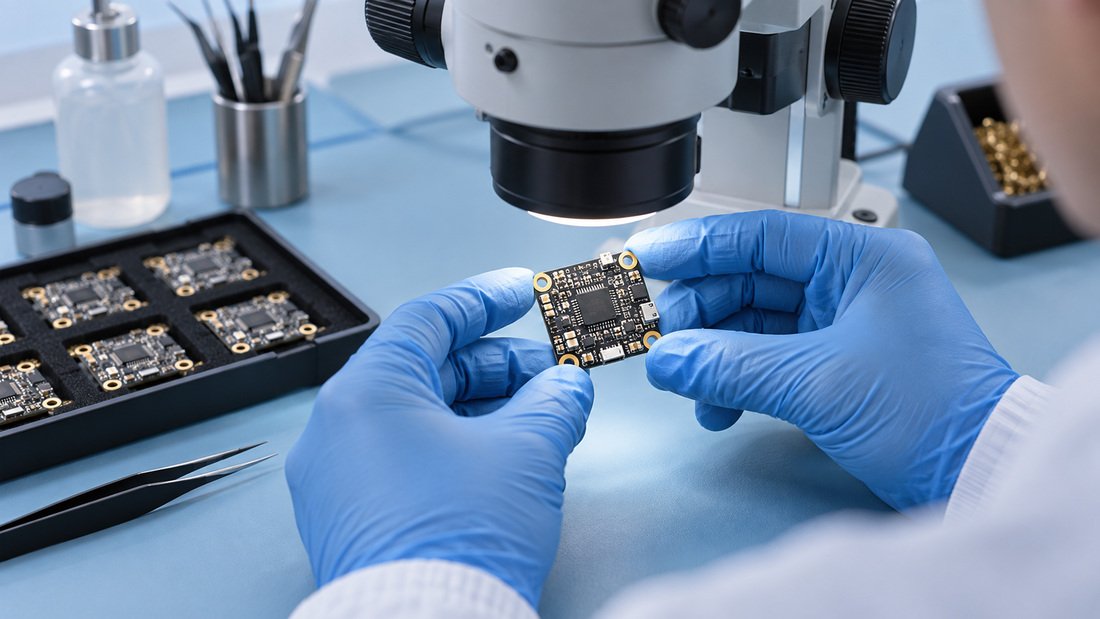
FPV electronics board prepared for a visual engineering review
Confirm the photograph's product and process before publication.

The first distinction

Which kind of project do you have?

“OEM/ODM” can describe several very different tasks. A buyer may want an existing item in new packaging, a controlled hardware variant, a new assembly using known modules, or a new board and firmware design. The schedule, technical risk, ownership and acceptance method differ across those cases.

STANDARD

Source an existing configuration

Identify the active SKU, exact variant, quantity and destination. Check dimensions, interfaces, firmware, included parts and relevant documents. An unchanged product can still require careful selection: a connector, radio band or battery pack may have several options. A sample and a purchase specification can establish a repeatable order before additional customization is considered.

ADAPT

Change a defined attribute

Specify the intended difference, such as cable length, connector placement, enclosure color, label or package format. Mark everything that must remain the same. Decide whether the change needs a new sample, test or regulatory assessment. A small visual change may be simple; a change to an antenna path, power connection or battery can alter the technical scope substantially.

DEVELOP

Create a new design

Provide an application brief and acceptance criteria before requesting a firm schedule. Board design, firmware, RF behavior, mechanical fit, test fixtures and production files may involve different parties. Discuss ownership of drawings, source files, tooling and intellectual property in a written agreement. A prototype should be evaluated against the actual host system before production approval.

The project category can change as questions are answered. A planned relabel may reveal that the existing product lacks a required interface. An apparently new board may be achievable through a controlled variant of a current module. A useful discovery call records the options, open assumptions and who must resolve them. It does not convert an untested idea into a production commitment.

Prepare the brief

Information that makes the first review useful

Describe the user and the task. For a drone soccer program, include school or club context, expected group size, operating space, power and replacement needs. For a receiver, state radio band, transmitter, firmware, flight controller, outputs, antenna layout, mass and packaging limits. For a propulsion assembly, include aircraft mass, propeller envelope, battery and target duty. For a private label range, list the models and exact branding changes. A broad phrase such as “custom drone parts” does not expose the decisions that drive cost or feasibility.

Attach what exists today: a reference product, block diagram, CAD model, board outline, connector table, bill of materials, test procedure or photo of the mating equipment. Mark uncertain details. If the buyer owns third-party drawings, confirm that sharing and modification are authorized. A project can begin with incomplete information, but the quotation should explain which assumptions remain unresolved and what further work is needed to resolve them.

State commercial constraints alongside technical ones. Give intended market, sample quantity, annual volume estimate if known, target launch date and documentation needs. Do not present a forecast as a firm purchase commitment unless it is. Tell the team if packaging must carry specific languages, warnings or traceability. Where a distributor will sell under its own brand, decide who will write and approve the public specifications and who will receive after sale questions.

Finally, define a practical first decision. You might need confirmation that a standard part fits, an estimate for prototype work, a packaging mockup or a sample evaluation plan. Asking for every price and deadline before the configuration is fixed often produces a quote that cannot be compared fairly with another supplier's offer.

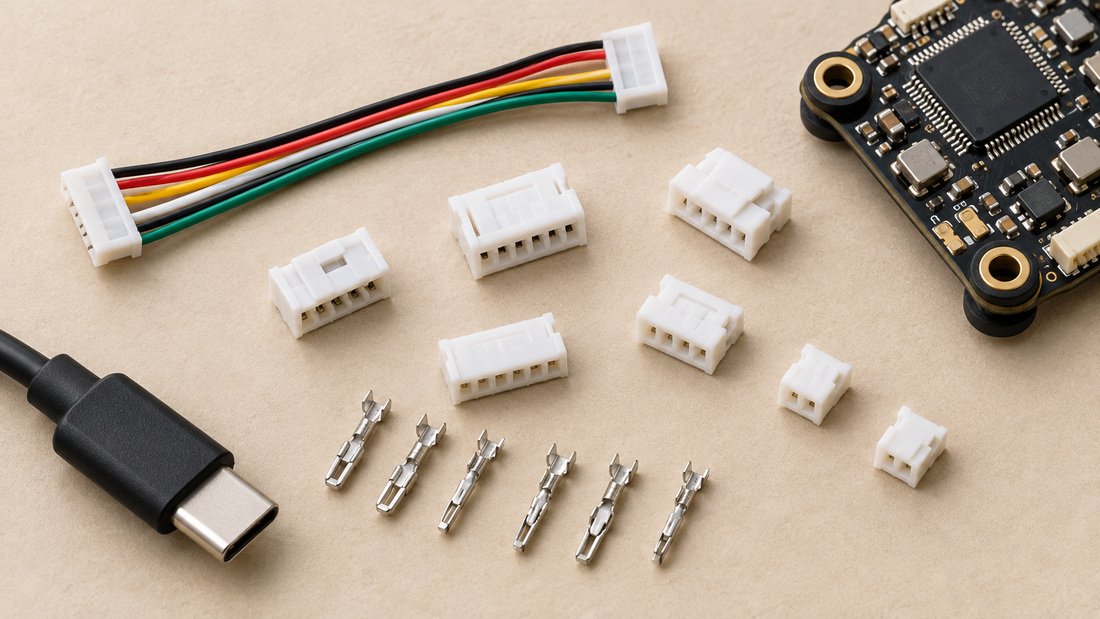
Drone electronics connectors and wiring harness for interface planning
Use the image as a visual prompt, not proof of a particular available connector.

A proposed workflow

Decisions from concept to repeat order

The steps below are a discussion framework. The actual engineering, testing and production activities must be confirmed in the project proposal.

01

Scope review

Compare the brief with an existing product or platform. Identify the required change, reference equipment, constraints and exclusions. Assign open questions to buyer or supplier. If a compliance requirement applies, identify the market and document before choosing a design route.

02

Technical proposal

Describe the selected route, deliverables, assumptions, prototype quantity, responsibilities and acceptance method. For a PCB project, drawings and test fixtures may be relevant. For packaging, artwork and a physical proof may be more relevant. The proposal should not suggest that all service lines are automatically included.

03

Prototype or sample

Use representative parts and record the revision. Test electrical fit, mechanical clearance, firmware behavior and the real usage context as appropriate. A classroom package also needs a practical charging, maintenance and spare plan. Document failures and changes before declaring a sample approved.

04

Preproduction decision

Agree on a controlled specification, packaging, labeling, inspection points, order quantity and delivery terms. Resolve ownership of files and tooling. If the sample has changed, identify whether another approval is necessary. Link any product claim to the supporting measurement or document.

05

Production and inspection

Confirm what will be built and checked for the actual product. Define who accepts deviations and how changes are communicated. Record variant or lot identifiers that the buyer can use later. Do not infer a universal factory capacity or test sequence from a generic website section.

06

Support and revision

Agree on technical contacts, spare parts, field feedback and after sale responsibilities. If a component becomes unavailable or a design changes, assess the impact on existing customers. A later repeat order should cite the approved configuration, not only the original project name.

Services by decision

Explore the work that matches your project

Drone PCBA design and manufacturing

Useful when board functions, connectors, physical outline or assembly are part of the brief. Prepare a block diagram, interface table, target quantities and test expectations. Confirm the design files and manufacturing scope that will actually be delivered.

Flight controller development

Relevant to a new control board or significant adaptation. List sensors, outputs, power, flight stack expectations and reference aircraft. A named processor does not define the complete board or firmware behavior.

Motor and propulsion matching

Start with mass, desired behavior, propeller envelope, battery and duty. Evaluate the motor, ESC and propeller together. Confirm the test setup behind any performance number.

Logo and packaging customization

Define the exact product first, then artwork, labels, manual, insert and carton requirements. Packaging claims must reflect the verified product and destination rules.

Private label drone parts

For a branded range, decide assortment, variant codes, approved imagery, packaging, replenishment and support ownership. A private label program is more than placing a logo on an isolated sample.

Bulk production

When a sample is approved, define revision, incoming materials, inspection criteria, acceptable substitutions, labeling and traceability. Ask which production and test steps apply to the exact item.

Evidence and ownership

Clarify what the final handoff includes

A sample can look complete while the project is still missing important handoff items. A buyer may need a current specification, approved drawing, firmware file, programming procedure, test instruction, label artwork or replacement parts list. Which materials are included depends on the negotiated scope and any third-party rights. List the requested outputs before the quote is accepted and identify the format, revision and owner of each item.

Testing has a similar distinction. A bench check can establish an electrical connection or a basic function. It does not automatically show reliable operation across every aircraft, temperature, radio environment or destination market. If the buyer needs a formal test plan, describe the environment, sample size, equipment and pass criteria. Where a certificate or battery transport document is required, match it to the exact model and configuration. Do not copy a statement from an unrelated product family.

Commercial ownership also matters. Clarify who owns source files, firmware changes, tooling, printed artwork and the right to use a design with other customers. Agree on what happens if the buyer supplies copyrighted assets or a third-party platform. If a package carries the buyer's brand, decide who approves instructions and claims. These questions are easiest to settle before a design or production commitment, not after goods have shipped.

Send with your first inquiry

  1. Application, intended user and destination market.
  2. Reference product, drawings or BOM, with unknowns marked.
  3. Required change and attributes that must stay fixed.
  4. Sample quantity, projected volume and target date.
  5. Requested documents and acceptance criteria.
Upload your BOM

Before approving a project

Five decisions that prevent an ambiguous order

Define the baseline. Identify the exact reference product, firmware and revision from which the work begins. Two suppliers can quote a “custom receiver” while one proposes changing a connector on an existing board and the other proposes a new layout. Without a baseline, prices and schedules are not comparable. Include photographs and the mating hardware, and describe any assumptions that have not been checked.

Separate mandatory requirements from preferences. A maximum board outline or a required control protocol may determine whether the concept works at all. A preferred carton finish may be adjustable later. Rank requirements so the engineering team can reveal a conflict early. For every mandatory requirement, state how the buyer will verify it. If no practical test exists yet, include development of a test method in the proposed scope.

Agree on change handling. Prototype work often reveals a better connector, a different routing need or an unavailable component. Decide who can approve a substitution, which changes trigger another test and whether they change the commercial quote. A verbal agreement during a call is easy to forget; a short revision note attached to the project record makes the decision repeatable.

Match evidence to claims. If a branded package will state an operating band, voltage, performance figure or compatibility list, keep the source of that statement with the artwork approval. A test on one prototype under limited conditions may not support a broad market claim. If the evidence is not yet available, write a narrower description or make the claim conditional on further work. The same principle applies to educational kits and event materials.

Plan the handoff after shipment. Decide what a distributor, school or integrator needs to operate and maintain the product: spare parts, setup instructions, firmware version, diagrams, contact route and traceable order information. An impressive sample can still be a difficult product if the next customer cannot identify its variant or replace a worn part. The handoff list belongs in the project scope before bulk production, not as an afterthought.

A buyer can reduce uncertainty by separating three estimates: the time to settle requirements, the time to build and evaluate a sample, and the time to produce approved goods. Each depends on different people and materials. A fixed launch date may require an earlier decision on a standard product if new engineering cannot be validated in time. Write down the trade-off rather than quietly shortening tests. The project can then proceed with a scope appropriate to its real deadline and acceptance needs.

Frequently asked questions

OEM and ODM project questions

What is the difference between OEM and ODM in this context?

The labels are used differently across the industry. For this site, describe the actual work: supply an existing product under agreed branding, modify a controlled variant, or develop a new design from a brief. Ask for the proposed deliverables and ownership in writing. A label alone does not tell you who owns drawings, firmware or tooling, or whether engineering validation is included.

What should I send before asking for a custom quote?

Send the use case, existing product or reference design, required differences, mating hardware, target market, quantities and target date. Add drawings, photos or a BOM if available. State what is uncertain and what evidence you need before approval. This makes it possible to distinguish a catalog configuration from an adaptation or a new development project.

Can a standard component be sold under my brand?

That depends on the item, quantity, permitted branding and packaging scope. Start with the exact model and variant; then specify logo placement, label, manual and carton. Confirm trademark rights and approval of public specifications. The quotation should identify whether the hardware remains unchanged and which artwork or packaging proof will be supplied.

Do you offer a fixed minimum order quantity?

The supplied documents do not establish a universal MOQ. Existing parts, custom packaging, PCB adaptations and new designs have different economics. Request a quote for the exact scope and quantity; ask which costs relate to samples, setup, tooling or production. A single headline MOQ can hide the real constraints of an engineering project.

Can you customize an ELRS receiver or RF module?

The site lists RF development topics, but feasibility must be assessed against the actual band, board layout, antenna, firmware, radio equipment and destination market. Send an interface brief and the current system. Ask which parts of the RF design, firmware and testing are included. Do not assume that a renamed or repackaged receiver has a new radio approval.

What is needed for a flight controller development brief?

Identify the aircraft, expected sensors, power, outputs, communications, board outline, mounting, firmware environment and validation plan. Include the ESC, receiver and battery used in the reference build. A processor name is not enough to define the control board. The proposal should specify prototype outputs, testing responsibility and deliverables.

How should I approve a sample?

Record the model and revision, approved photographs or drawings, functional tests, packaging and any known exceptions. Test the sample in the actual system and environment as far as practical. If a later change affects performance or fit, determine whether another approval is needed. Keep the approved reference available for comparison with a production lot.

Who owns the design files and firmware?

Ownership and license terms need an explicit written agreement. A custom project can contain buyer supplied files, supplier know-how, open-source components and third-party intellectual property. Ask what files will be delivered, in which format, and what rights you will receive to use, modify or transfer them. Do not infer ownership from paying for a sample alone.

Will a custom product include compliance certificates?

Do not assume so. Requirements depend on the product, market and changes made. A new battery pack, radio path or assembled product may need its own evaluation even when it resembles a catalog item. Identify required standards and documents at the brief stage, then confirm which evidence exists and which work is part of the project quote.

How long does development or bulk production take?

The supplied sources do not support a universal lead time. Schedule depends on the technical scope, component availability, iterations, testing, packaging and buyer approval speed. Ask for a staged schedule that names assumptions and decisions. Treat a preliminary estimate differently from a committed delivery date in an accepted purchase agreement.

Can a school request a branded drone soccer package?

Describe the school program, number of learners, equipment needs, colors or identity, spare parts and required instructions. Confirm the standard package contents before discussing branding. A label or box change does not automatically alter technical performance. The proposal should specify approved artwork, included items, sample proof and any support services separately.

What happens after a bulk order is delivered?

Support and remedies depend on the contract and product policy. Keep purchase references, model and lot identifiers, approved sample details and a clear description of any issue. Agree in advance on who receives technical questions, how suspected defects are documented, and how design changes are communicated. A website overview should not be treated as a universal warranty promise.
Scope the next step

Share the product decision you need to make.

Send the reference product, intended change, quantity and target market. We will use those details to frame the discussion.