Civilian FPV & drone sports components
Technical SupportContact Sales Global · English

oem odm service / B2B guide

Custom ELRS Receiver Development

A practical route to evaluating custom elrs receiver development for brand owners and system integrators. Identify the exact product or project first, then assess interfaces, revisions, documents and purchasing scope with the appropriate team.

Discuss requirements
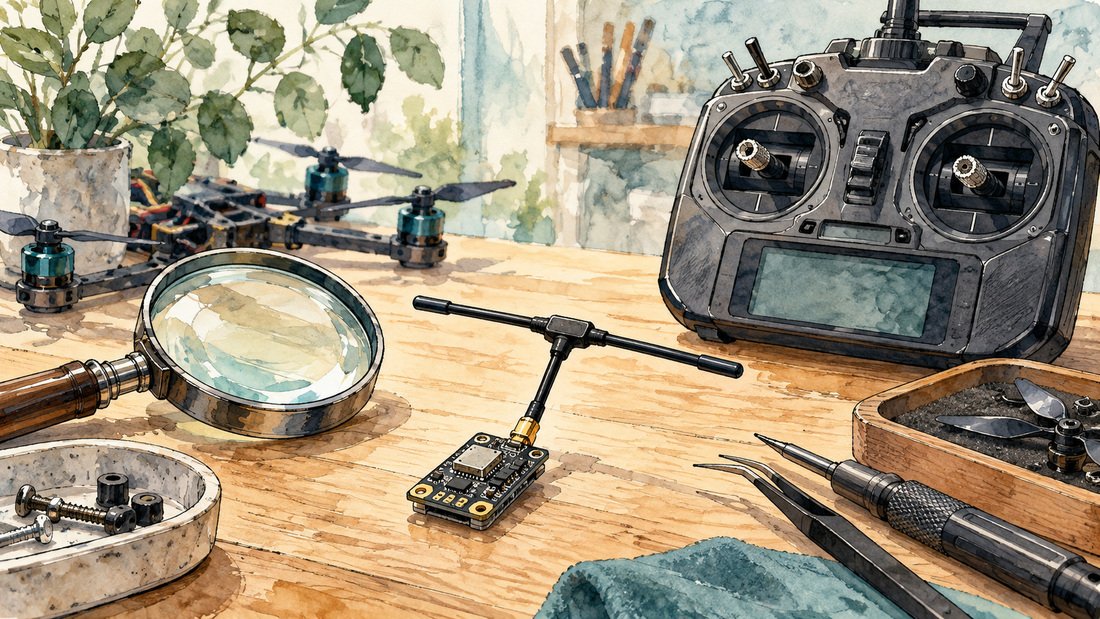
DronePartsFactory.com Elrs Receiver Workbench Watercolor
Illustrative view for product selection and system review. Confirm the exact offered model in writing.
AT A GLANCE / OEM ODM SERVICE

Four questions to resolve for Custom ELRS Receiver Development

Start with a buyer decision, not a product category alone. The checks below turn this page into a practical brief for a supplier conversation and help distinguish a relevant example from a confirmed offer.

01

Radio band and region

Check the link band and the rules that apply in the destination market; the antenna and TX/RX configuration must belong to the same planned system. For Custom ELRS Receiver Development, capture the applicable configuration and unresolved question in the buyer brief.

02

Firmware and handset setup

Document firmware target, transmitter module format and binding expectations. An older firmware screenshot is not proof of the version offered now. For Custom ELRS Receiver Development, capture the applicable configuration and unresolved question in the buyer brief.

03

Antenna connection and placement

Confirm connector type, cable length and installed position; a radio component cannot be evaluated in isolation from the aircraft enclosure. For Custom ELRS Receiver Development, capture the applicable configuration and unresolved question in the buyer brief.

04

Flight-controller protocol and wiring

Compare UART, pinout and protocol needs with the actual flight controller before deciding a receiver is a replacement. For Custom ELRS Receiver Development, capture the applicable configuration and unresolved question in the buyer brief.

What the original catalog page identifies

HomeOEM/ODM ServiceCustom ELRS Receiver DevelopmentOEM/ODM SERVICECustom ELRS Receiver DevelopmentPractical information for buyers and technical teams evaluating custom elrs receiver development with Sichuan Yuanxin Supply Chain Technology Co., Ltd.ON THIS PAGEOverviewProcessDocumentsRequest supportOverviewCustom ELRS Receiver Development is managed as part of a structured B2B sourcing workflow. Requirements vary by

This source summary is context for a buyer review. Catalog words do not establish inventory, a universal performance guarantee or a certificate for every variant. Ask for the currently offered specification and confirm the actual product label before ordering.

01 / Project brief

Custom ELRS Receiver Development: identity and scope

For brand owners and system integrators, project brief is a concrete decision in the review of Custom ELRS Receiver Development. State which version, application and market the question concerns. This helps distinguish an actual requirement from an attractive but unrelated catalog example.

The first decision is what the named page actually covers. A buyer should separate a catalog category from an exact model, a sample from a production order, and a component claim from a finished aircraft claim. The current design, accessories, firmware and destination can change the answer. Capture the identifiers you can verify and explicitly mark everything that remains unknown.

Ask the supplier to identify the offered item in writing and to state whether an answer is based on a drawing, sample, datasheet, test report or proposed alternative. A similar family name cannot settle a revision or certification question. Keep the source of each statement beside the decision it supports.

For this page, use the exact title “Custom ELRS Receiver Development” in the project record and tie the answer to its source. If an assumption cannot be verified from the supplied material, request a model-specific document or a written answer before describing it as a fact. An engineer may need a bench result, whereas a purchasing team may need a scoped quotation or a distributor may need corrected product data.

02 / Engineering inputs

Custom ELRS Receiver Development: application first

For brand owners and system integrators, engineering inputs is a concrete decision in the review of Custom ELRS Receiver Development. State which version, application and market the question concerns. This helps distinguish an actual requirement from an attractive but unrelated catalog example.

Describe the system and the people who will use it. A school needs lesson continuity, spare parts and clear setup instructions; a distributor needs accurate variants and repeatable product data; an integrator needs interfaces and change control. Different users can start with the same item yet require different evidence and package contents.

Write one concrete use case and the acceptance condition for it. Then compare each offered specification and service with that condition. If a response addresses only one part of the intended use, record the remaining gap instead of treating the project as approved.

For this page, use the exact title “Custom ELRS Receiver Development” in the project record and tie the answer to its source. If an assumption cannot be verified from the supplied material, request a model-specific document or a written answer before describing it as a fact. An engineer may need a bench result, whereas a purchasing team may need a scoped quotation or a distributor may need corrected product data.

03 / Design review

Custom ELRS Receiver Development: technical boundary

For brand owners and system integrators, design review is a concrete decision in the review of Custom ELRS Receiver Development. State which version, application and market the question concerns. This helps distinguish an actual requirement from an attractive but unrelated catalog example.

Identify supply voltage, connectors, radio band, signal protocol, mechanical fit and software dependencies where they apply. A specification can be true for a standalone item while the intended assembly fails at its boundary. Supply a wiring diagram or photographs when a name alone cannot establish how parts meet.

Do a controlled compatibility review before a large purchase. Note what was measured, what was read from a manufacturer document and what still requires a bench test. Keep an approved configuration so a later substitution does not silently change the system.

For this page, use the exact title “Custom ELRS Receiver Development” in the project record and tie the answer to its source. If an assumption cannot be verified from the supplied material, request a model-specific document or a written answer before describing it as a fact. An engineer may need a bench result, whereas a purchasing team may need a scoped quotation or a distributor may need corrected product data.

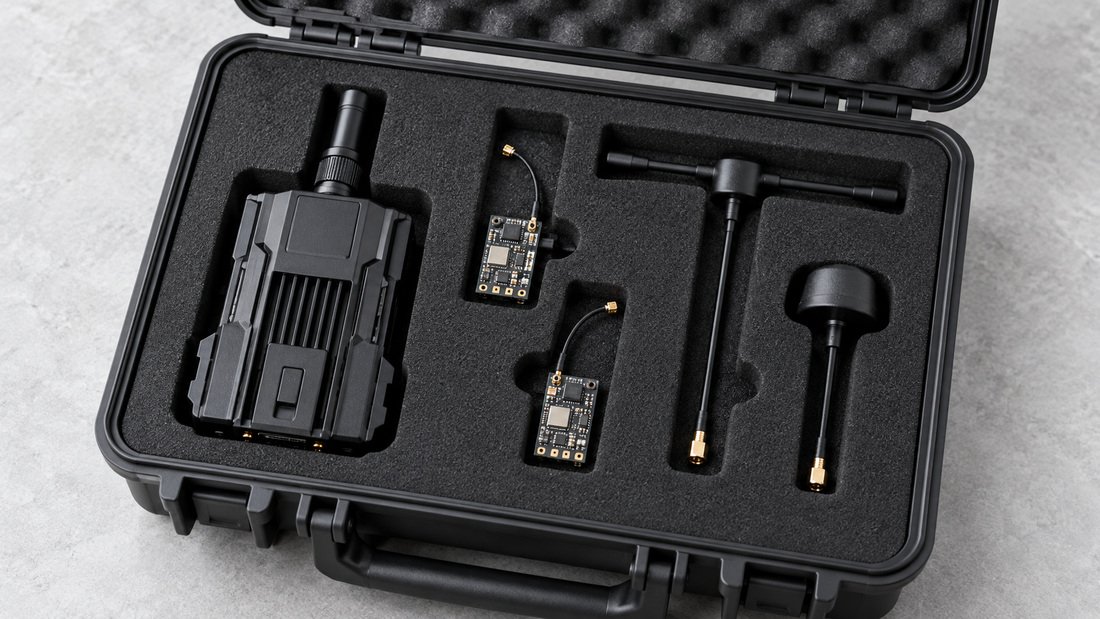
DronePartsFactory.com Elrs Receiver Tx Antenna Kit
Illustrative view for product selection and system review. Confirm the exact offered model in writing.
04 / Prototype and pilot

Custom ELRS Receiver Development: physical and digital revision

For brand owners and system integrators, prototype and pilot is a concrete decision in the review of Custom ELRS Receiver Development. State which version, application and market the question concerns. This helps distinguish an actual requirement from an attractive but unrelated catalog example.

Record the label, PCB revision, firmware target and packaging version separately. These can move at different times, and a photograph from a prior listing may not depict the offered shipment. A BOM or quotation should identify the exact revision used to price and assess the project.

If a cell, board, connector, enclosure, artwork or software version changes, request a change summary. Decide whether the sample, performance observation, document or carrier instruction remains applicable. A new date alone is not evidence that all earlier assumptions still hold.

For this page, use the exact title “Custom ELRS Receiver Development” in the project record and tie the answer to its source. If an assumption cannot be verified from the supplied material, request a model-specific document or a written answer before describing it as a fact. An engineer may need a bench result, whereas a purchasing team may need a scoped quotation or a distributor may need corrected product data.

05 / Change control

Custom ELRS Receiver Development: evaluation design

For brand owners and system integrators, change control is a concrete decision in the review of Custom ELRS Receiver Development. State which version, application and market the question concerns. This helps distinguish an actual requirement from an attractive but unrelated catalog example.

State what a sample is intended to demonstrate and who will judge the result. A meaningful trial includes equipment, configuration, conditions, procedure and a decision threshold. Capture a failure sequence without changing several variables at once. Protect the sample and evidence if a fault might require supplier review.

Distinguish a successful installation from a general performance claim. One bench result cannot establish behavior for every aircraft, battery or environment. Share the measured outcome with the buyer and technician before converting a pilot request into a production order.

For this page, use the exact title “Custom ELRS Receiver Development” in the project record and tie the answer to its source. If an assumption cannot be verified from the supplied material, request a model-specific document or a written answer before describing it as a fact. An engineer may need a bench result, whereas a purchasing team may need a scoped quotation or a distributor may need corrected product data.

06 / Validation plan

Custom ELRS Receiver Development: documentation

For brand owners and system integrators, validation plan is a concrete decision in the review of Custom ELRS Receiver Development. State which version, application and market the question concerns. This helps distinguish an actual requirement from an attractive but unrelated catalog example.

List each required file by name and reason: drawing, pinout, safety data sheet, transport test summary, instruction, invoice or a market-specific report. The existence of a document for one model does not establish coverage for another. Some files may require a controlled request or an agreement before sharing.

Check the issuer, model, revision, date and stated scope of a received file. If a needed record is unavailable, list the gap and the person who owns the next action. Avoid publishing the words certified, compliant or approved without evidence for the exact configuration and destination.

For this page, use the exact title “Custom ELRS Receiver Development” in the project record and tie the answer to its source. If an assumption cannot be verified from the supplied material, request a model-specific document or a written answer before describing it as a fact. An engineer may need a bench result, whereas a purchasing team may need a scoped quotation or a distributor may need corrected product data.

07 / Packaging and traceability

Custom ELRS Receiver Development: commercial stage

For brand owners and system integrators, packaging and traceability is a concrete decision in the review of Custom ELRS Receiver Development. State which version, application and market the question concerns. This helps distinguish an actual requirement from an attractive but unrelated catalog example.

Separate exploratory volumes, evaluation units, pilot quantity and an accepted order. Provide destination, target date and any required packing or documentation in the first inquiry. An estimated forecast is useful context, but it is not a stock reservation or a guaranteed production schedule.

Review the written offer for unit price, currency, sample fees, tooling, freight, taxes, payment milestone, revision and validity. Those terms are project specific. If one changes, obtain an updated written offer before treating the earlier discussion as binding.

For this page, use the exact title “Custom ELRS Receiver Development” in the project record and tie the answer to its source. If an assumption cannot be verified from the supplied material, request a model-specific document or a written answer before describing it as a fact. An engineer may need a bench result, whereas a purchasing team may need a scoped quotation or a distributor may need corrected product data.

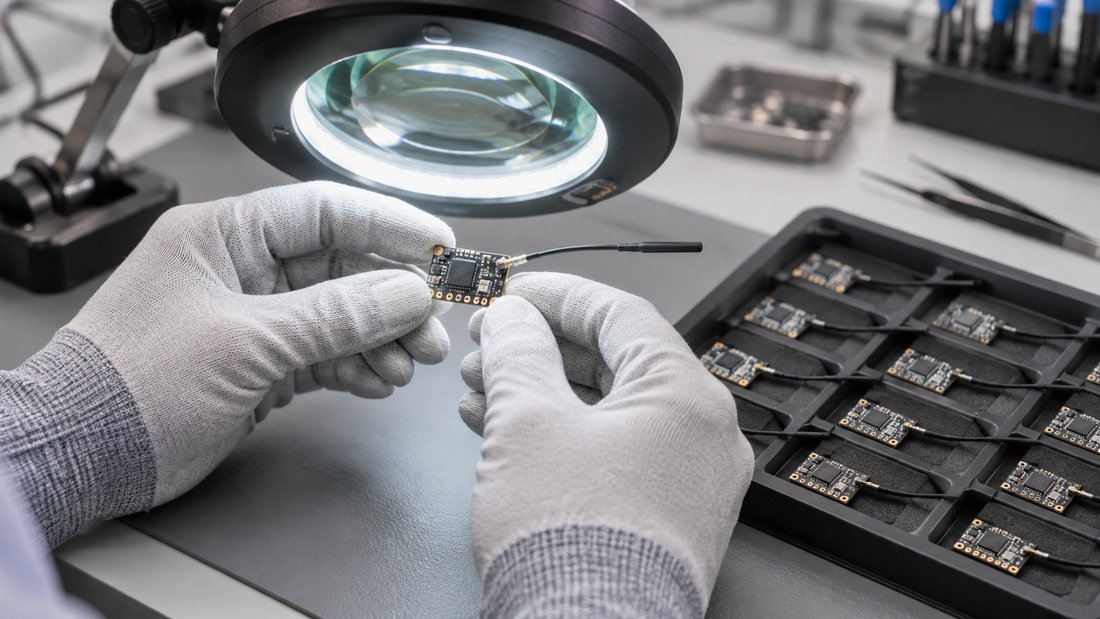
DronePartsFactory.com Elrs Receiver Quality Inspection
Illustrative view for product selection and system review. Confirm the exact offered model in writing.

Frequently asked questions about Custom ELRS Receiver Development

How should I verify radio band and region for Custom ELRS Receiver Development?

Check the link band and the rules that apply in the destination market; the antenna and TX/RX configuration must belong to the same planned system. Begin with the exact item, model and configuration associated with Custom ELRS Receiver Development. The supplied page currently describes: HomeOEM/ODM ServiceCustom ELRS Receiver DevelopmentOEM/ODM SERVICECustom ELRS Receiver DevelopmentPractical information for buyers. Confirm what belongs to the offered revision and ask for a dated product record before using a catalog name in a purchase order.

How should I verify firmware and handset setup for Custom ELRS Receiver Development?

Document firmware target, transmitter module format and binding expectations. An older firmware screenshot is not proof of the version offered now. For Custom ELRS Receiver Development, describe the age group, number of simultaneous users, teaching or event setting, existing equipment and spare needs. Ask which pieces are included in the actual package and what instructors must provide. Any operating or safety procedure should be reviewed for the local program.

How should I verify antenna connection and placement for Custom ELRS Receiver Development?

Confirm connector type, cable length and installed position; a radio component cannot be evaluated in isolation from the aircraft enclosure. A distributor assessing Custom ELRS Receiver Development should identify destination market, channel, target buyers, technical support capacity and expected assortment. Obtain verified model-specific images, contents and specifications. Territory, exclusive rights and commercial conditions require a separate written agreement.

How should I verify flight-controller protocol and wiring for Custom ELRS Receiver Development?

Compare UART, pinout and protocol needs with the actual flight controller before deciding a receiver is a replacement. Compatibility for Custom ELRS Receiver Development must be checked against the real system. Compare power, pinout, radio band, firmware, protocol and mechanical fit as applicable. An adjacent model or a successful installation on another aircraft cannot establish compatibility for yours.

What belongs in a sample evaluation for Custom ELRS Receiver Development?

Define the test question before ordering a sample of Custom ELRS Receiver Development. Record the test platform, expected result, actual result, relevant environment and item revision. Separate exploratory testing from acceptance of a pilot or volume order.

Which drawings or documents matter for Custom ELRS Receiver Development?

Request the drawing, data sheet, wiring information, instructions or model-specific evidence that answers your decision about Custom ELRS Receiver Development. For batteries, SDS and UN 38.3 evidence serve different purposes. Availability and document scope need confirmation.

How do I compare an alternative to Custom ELRS Receiver Development?

For an alternative to Custom ELRS Receiver Development, list the limits that cannot change and evaluate the proposed replacement against them. A similar product name does not guarantee the same connector, firmware, dimensions or evidence. Approve a substitute in writing.

What should be included in a quotation for Custom ELRS Receiver Development?

A useful quotation for Custom ELRS Receiver Development names the SKU or scoped service, quantity, revision, destination, included accessories, currency, price exclusions, applicable trade terms and target schedule. Ask about sampling and documentation separately if they affect approval.

How should we document a change to Custom ELRS Receiver Development?

Track any change affecting Custom ELRS Receiver Development in a dated drawing, BOM, listing or order. Identify the changed cell, board, connector, firmware, enclosure or pack contents, then revisit the earlier test and document evidence before reusing it.

What if a relevant certificate or test file is unavailable?

Do not substitute an unrelated report for Custom ELRS Receiver Development. Ask for a written status of the requested file, the product it covers and the possible project impact. A carrier, importer or qualified adviser may have to decide whether an alternative path is acceptable.

How do we report a problem related to Custom ELRS Receiver Development?

Provide an order reference, model, revision, photographs, the first occurrence and steps to reproduce a problem involving Custom ELRS Receiver Development. Keep packaging or affected units available. Seek specific return and battery-shipping instructions before dispatch.

What is the next step after reviewing Custom ELRS Receiver Development?

Summarize the remaining decision for Custom ELRS Receiver Development: model, intended use, quantity, destination, documents, evaluation owner and deadline. Use the appropriate quote, sample, BOM, technical support or compliance route. Keep the final reply with the order record.
PRIMARY REFERENCE

Check the current official guidance

ExpressLRS getting started documentation can help frame a technical or transport question. It is a third-party source, not evidence that any DPF product has a particular approval. Confirm the applicable version, destination and exact product with the responsible party.

Continue your evaluation

For a commercial decision, contact the team with the model, expected quantity, destination and target date. For an engineering decision, attach the controlled drawing or BOM. If you need documents, specify the report and the exact product configuration.