Civilian FPV & drone sports components
Technical SupportContact Sales Global · English

ABOUT DRONE PARTS FACTORY / CHENGDU, CHINA

Why we created DPF

Building an FPV product line is hard when the parts come from different suppliers. A receiver must work with its radio link. A flight controller, ESC and motor must suit the same build. For distributors and private label brands, the challenge goes further: the product must be clear to specify, package and supply again when customers reorder.

Drone Parts Factory exists to make that work easier. We bring FPV drone parts, ExpressLRS hardware and drone soccer systems together around the needs of people who build, source and sell them. Our goal is simple: help you choose components with confidence and turn a successful first order into a dependable product line.

TELL US WHAT YOU ARE BUILDING
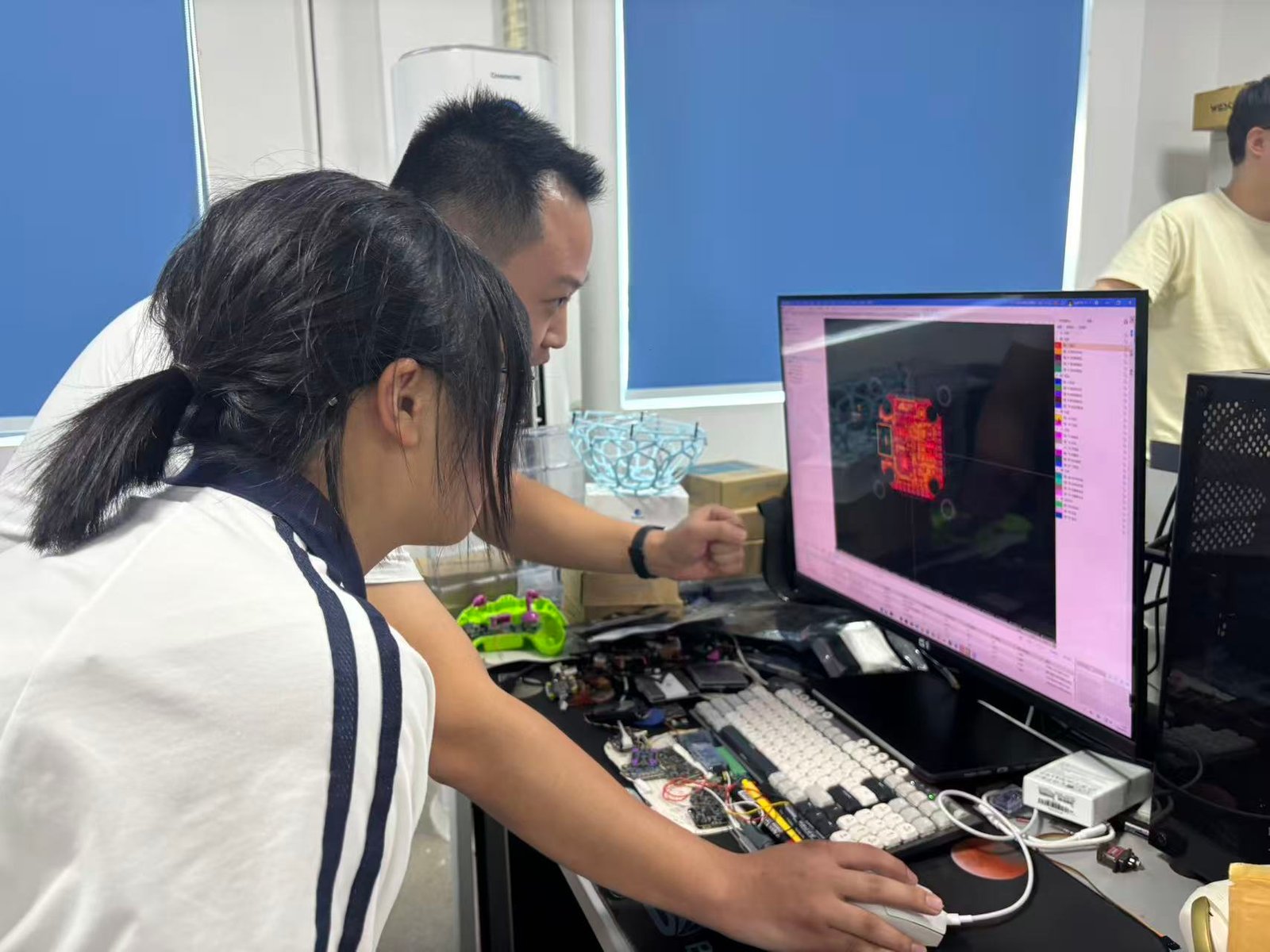
Company supplied image named factory training showing drone related work
Company-supplied training image. Ask our team about the current facilities and project scope.
01 / RADIO LINKExpressLRS receivers, TX modules and antennas
02 / FLIGHT BUILDControllers, ESCs, motors, frames and video
03 / DRONE SPORT2S and 4S drone soccer systems
04 / PROJECT WORKConfiguration, OEM/ODM and repeat sourcing

OUR BEGINNING

How we started

Our story began with model aircraft parts. Working close to this market showed us that buyers needed more than a list of components. They needed help connecting a product requirement to suitable hardware, especially when a project involved radio communication, flight control, propulsion or a complete drone soccer setup. A component page could begin the conversation, but it could not answer every question about how the whole build would work.

That experience shaped DPF's direction. Behind the site is Sichuan Yuanxin Supply Chain Technology Co., Ltd., based in Chengdu, China. The company describes work spanning research, development, manufacturing, sales and drone sports event operations. DPF gives international buyers one place to begin a focused conversation about FPV and RC products. We do not ask customers to assume that every product receives the same engineering work or certification; the relevant scope is established for the particular model and order.

A buyer might arrive with a specific ExpressLRS receiver model. Another may have a school program and need protected aircraft, controllers, spares and a practical classroom setup. A third may have a BOM, a private label concept or a problem replacing an approved part. These are different briefs. We structure the first response around the application, target market, model or system, expected quantity and decision the buyer needs to make. This allows a technical or commercial question to be routed with useful context.

HOW WE MAKE IT / COMMUNICATION

Start with the link between parts.

For radio link decisions, DPF focuses on ExpressLRS receivers, TX modules and related RF communication hardware. This gives buyers a clear starting point when selecting products for an FPV or RC lineup. Frequency band, transmitter and receiver configuration, firmware, antenna connection and the destination market must be specified before a broad family name can become a purchase-ready item.

For distributors, this means defining which version will appear in the catalog and what information staff can provide to customers. For integrators, it means comparing the receiver to the transmitter, flight controller and intended installation. The objective is a usable component selection record, not an assumption that one radio part fits every aircraft. See the ELRS and RF system catalog and receiver compatibility guidance for the questions to review.

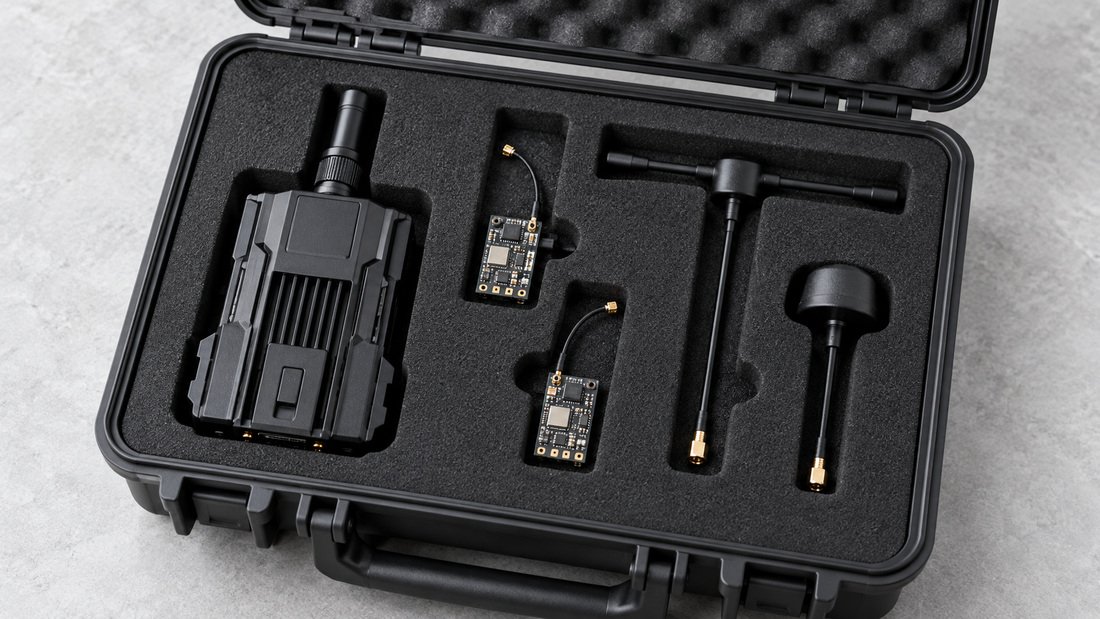
Supplied media showing ExpressLRS receiver, transmitter and antenna components
Illustrative product-family imagery; confirm the exact offered SKU, revision and contents.
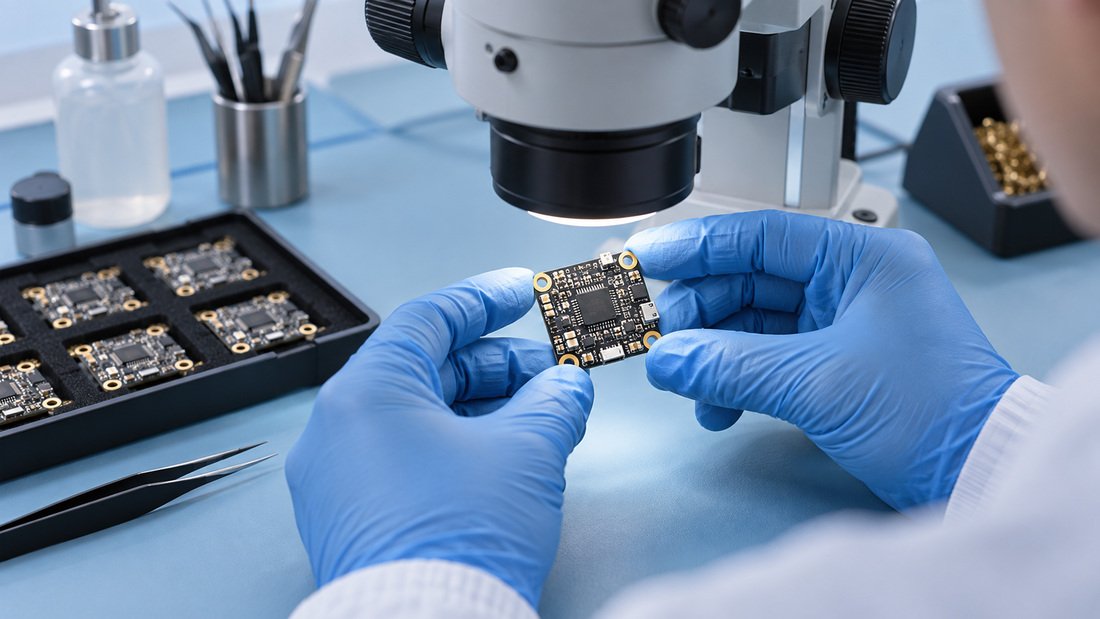
Supplied media of an FPV electronics board being inspected
Component inspection image from the supplied media list; project tests depend on the model.

HOW WE MAKE IT / FPV

Think in complete builds.

For FPV builds, the catalog covers flight controllers, electronic speed controllers, motors, frames and video accessories. Looking at these as a system helps customers plan builds and source related components together. A motor decision depends on the propeller, battery, expected aircraft mass and operating conditions. An ESC decision depends on electrical limits, wiring and firmware. A flight controller decision must account for the mounting pattern, pinout and software expectations of the intended assembly.

We encourage buyers to give the team an actual build target or BOM rather than relying on visual similarity between boards. The sample stage can then answer specific questions: does the assembly fit, communicate and operate under the agreed test conditions? Keep a record of the hardware and software revision used in that evaluation. Browse FPV electronics, propulsion and airframes, or send a BOM to start a more precise discussion.

HOW WE MAKE IT / DRONE SOCCER

Equip the program, not just the aircraft.

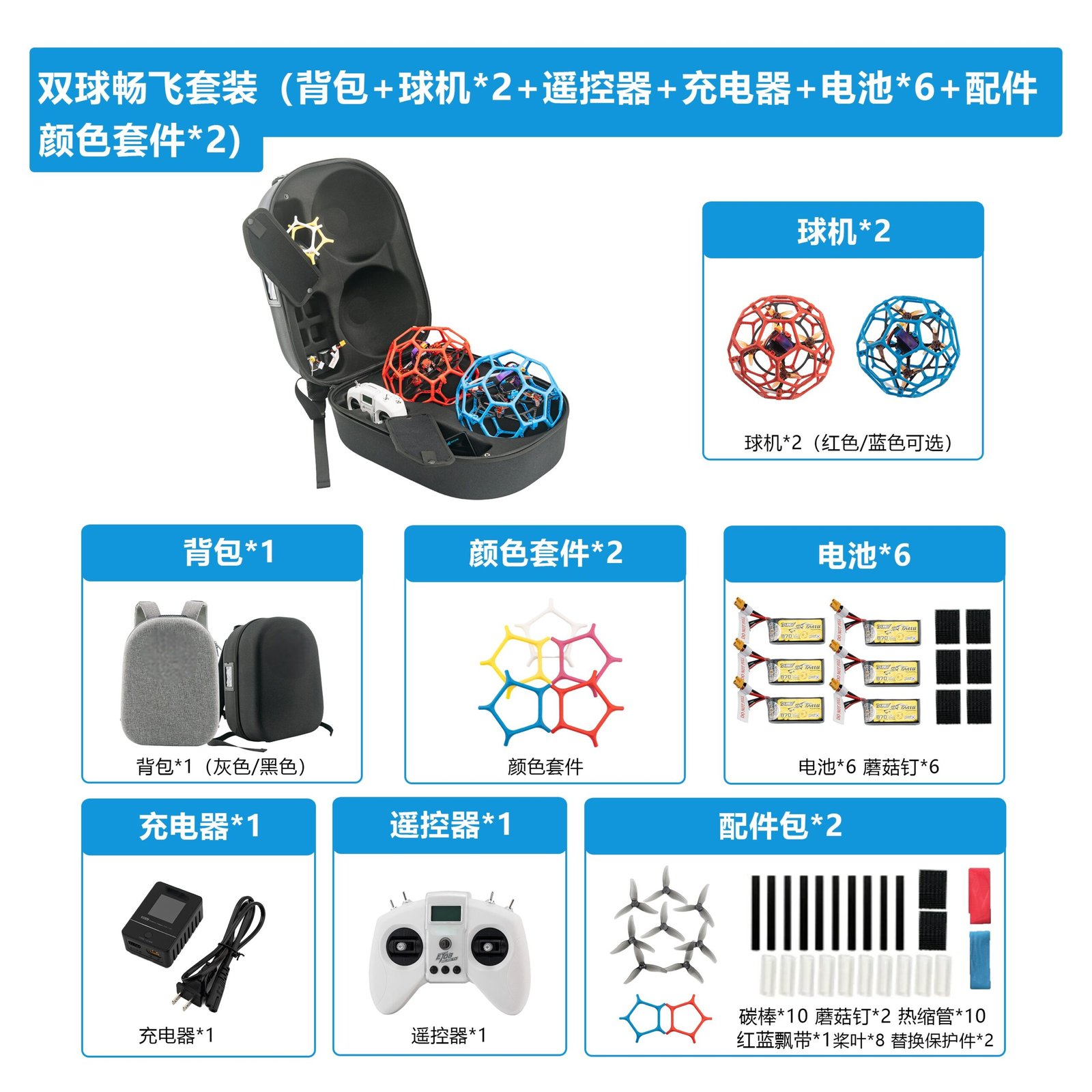
For schools, clubs and program suppliers, DPF offers 2S and 4S drone soccer systems. The company's work in drone soccer hardware and event operations informs our attention to products intended for training and competition. A school needs to consider the number of simultaneous learners, operating space, charging and storage, instructors, protective equipment and consumable spares. A club may also require consistent competition configurations and a maintenance procedure between sessions.

Those details determine whether a proposed package makes sense. A smaller aircraft does not automatically solve every beginner program, and a more powerful one does not automatically make a better competition purchase. Compare the supplied model, battery and controller, then plan a representative trial with the instructors who will use it. Explore drone soccer systems and school solutions before requesting a program quotation.

Company supplied image of protected drone soccer aircraft in flight
Company-supplied drone soccer imagery; package contents and event configuration vary by project.

A WORKING RELATIONSHIP

From first question to repeat order

01

State the requirement

Tell us the intended use, region, quantities and which interfaces are fixed. A drawing, BOM or model reference makes it possible to discuss the right product rather than an adjacent category. A school can state the age group and class structure; a distributor can explain the assortment and sales channel.

02

Compare the configuration

Review the exact SKU, supplied accessories, hardware and firmware version, and any compatibility question that matters to the end use. Ask for a current specification or model-specific document when an assumption cannot be checked from the catalog.

03

Evaluate before volume

Set up a sample or pilot against a recorded acceptance question. A technical result is useful only when the tested configuration and conditions are known. Schools should include instructors in the evaluation; integrators should test the actual assembly.

04

Document the next order

Record the agreed revision, packaging, quantity, destination, price terms, schedule and any changes from the approved sample. This helps customers reorder a recognizable product line and gives support staff a reference if something needs investigation.

OEM/ODM work may involve a different sequence, tooling discussion or document scope. The OEM/ODM service overview explains how a project brief can be reviewed; the written quotation defines what is included for a specific project. We avoid presenting a universal lead time, order minimum, territory promise or certification claim where the supplied material does not support one.

THE DPF EXPERIENCE IN PRACTICE

One catalog, four different starting points.

For a distributor

A distributor wants a range that can be explained and reordered. Begin with the audience and the assortment: which receiver variants, transmitter modules, flight boards and accessories fit your current customers? The decision then moves to technical data, packaging, product photographs, language, replacement parts and the way an approved configuration will be identified on a repeat order. DPF can discuss the requested products and private label scope. Sales territories, forecast volumes, exclusivity and channel responsibilities belong in a written partnership discussion, not in an implied website promise.

If customers will need setup help, decide who maintains the instructions and which team handles model identification after delivery. A sample should demonstrate the variant that will actually be listed. For an RF item, record band and antenna format; for an electronics board, record pinout and supported software. Send an assortment proposal through Become a Distributor.

For a private label brand

Start with the end user's problem and a requirement document. Separate standard catalog parts from anything requiring a design change, custom firmware, artwork or special packaging. The early brief should state dimensions, electrical interfaces, radio configuration, target market, quantity and acceptance tests. A brand name printed on a box does not establish that a part meets the intended system or local documentation requirements.

Discuss the approval stages before requesting bulk production: prototype, sample review, artwork proof and controlled production revision. Ask which files can be shared, who approves changes and how the model will be labeled. Then use a quotation that spells out the project scope, tooling or sample costs if applicable, and the responsibilities of both parties. The OEM project form gives this brief a dedicated route.

For a school or club

An education buyer may initially search for a single drone soccer ball, but the usable purchase is a learning and maintenance system. Count the learners who will fly at once, plan how instructors will supervise, and estimate the batteries, chargers, controllers and spare protective parts needed for a session. The school's own operating rules, storage practices and local requirements are part of the decision.

Request a list of exactly what comes in the proposed kit. Evaluate a sample during the kind of lesson or club session you intend to run, rather than only in a product photograph. Note replacement procedures and what instructors must learn before a competition. DPF can discuss suitable 2S or 4S system categories once the group size and operating setting are clear.

For a system integrator

The integrator already has an aircraft or a defined subsystem and needs a part that works within it. Supply the wiring diagram, supply voltage, connector and mounting constraints, protocol, firmware expectations and environment. Explain whether the required response is a candidate part, a replacement for an approved component or a development discussion. That distinction determines what evidence is useful.

Before a larger order, test the candidate on a representative assembly. Capture the exact revision and conditions under which it worked, along with unresolved issues. If a change in a radio, ESC, battery or mechanical envelope could alter the result, record the dependency. A practical acceptance record benefits both engineering and procurement; it also gives after-sales teams a clear reference if the system later behaves differently.

WHERE WE ARE HEADING

Build products around real use.

We want DPF to be a practical partner for the next generation of FPV and drone sports products. That means continuing to develop the hardware behind reliable builds while listening to buyers, teams and educators who use it. Product pages should make it easier to identify the relevant model, assembly and support route, especially when a familiar category contains several variants.

We see particular value in making drone soccer easier for schools and clubs to introduce, and in helping distributors build FPV product lines their customers can understand and use. Those objectives require attention to the components as well as the training, replacement and documentation around them. As requirements change, the conversation has to connect product development with real use in workshops, training spaces and competitions.

The DPF experience is intended to be focused: ExpressLRS hardware, FPV flight components and 2S/4S drone soccer systems rather than an unrelated parts marketplace. Product discussions start with the customer's requirement. Private label and packaging requests are discussed within a project brief. Inquiries have clear destinations for quotations, samples, technical support and distribution partnerships.

IDENTITY AND CONTACT

Who stands behind DPF?

Drone Parts Factory is a website operated for Sichuan Yuanxin Supply Chain Technology Co., Ltd. The provided registered address is Building 3, No. 81, Section 4, Yong'an Road, Dongsheng Street, Shuangliu District, Chengdu City, China. The provided Unified Social Credit Code is 91510122MA62LT2A8W; the registration authority is the Market Supervision and Administration Bureau of Shuangliu District, Chengdu City. Buyers preparing formal onboarding should request the current company registration record and the product-specific evidence relevant to their purchase.

Contact sales@dronepartsfactory.com or dronesminmin@gmail.com. You can also use the Contact Us page. For a faster answer, give us a product link or model, the intended application, target country and expected quantity. If the request concerns a previously delivered order, include its reference and describe the specific issue.

Company Profile: frequently asked questions

What is Drone Parts Factory?

DPF is a B2B site for civilian FPV and RC hardware, drone soccer systems and project conversations. It brings together ExpressLRS communication hardware, flight components, propulsion and protected sport aircraft. Sichuan Yuanxin Supply Chain Technology Co., Ltd. is the company behind the site. Ask about a specific item or project to receive a scoped answer.

Is DPF the same legal entity as Sichuan Yuanxin?

Drone Parts Factory is the site's trading identity; Sichuan Yuanxin Supply Chain Technology Co., Ltd. is the stated legal company. Its supplied Unified Social Credit Code is 91510122MA62LT2A8W. For onboarding, invoice or contract purposes, request current registration and commercial documents and confirm the named contracting party on the written offer.

What are DPF's main product families?

The focused range covers ExpressLRS receivers, TX modules and antennas; FPV flight controllers, ESCs, motors, frames and video accessories; and 2S/4S drone soccer systems and related parts. Check the live product page and current offered configuration, because a family label alone does not tell you which exact model is available.

Who typically buys from DPF?

Relevant buyers include FPV and RC distributors, private label brands, civilian drone system integrators, schools, training providers, drone soccer clubs and event-related organizations. Their evaluation criteria differ: component variants for distributors, interfaces for integrators, and training, spares and operating procedures for education buyers.

Can DPF help select compatible components?

Share the actual transmitter, receiver, flight controller, power system, frame and software details. The team can discuss candidate parts and identify questions that require a datasheet, sample or bench review. The buyer should validate the approved assembly under its own use conditions before treating it as a production configuration.

Does DPF offer OEM or private label work?

Customers can discuss product configuration, development scope, labeling and packaging requirements. Whether a particular design, firmware or package is feasible depends on the brief and agreement. Send a target market, technical requirements, projected quantity and expected timeline through the OEM project contact route to begin a scoped review.

What should a school include in a drone soccer inquiry?

Describe the learners' age group, class size, operating space, intended session length, instructor capacity and number of concurrent aircraft. State whether you need controllers, batteries, chargers, spares, storage or event equipment. Ask for the exact package contents, local operating considerations and a sample evaluation plan.

Can I verify a factory capacity or certification from this page?

No specific capacity number or blanket product certification is asserted here. Request evidence that matches the actual model, revision, manufacturing arrangement and destination market. A company photo, demonstration or general process description is not a substitute for a model-specific report or an agreed production and inspection plan.

How do I request a price and lead time?

Provide the product model or controlled BOM, quantity, destination, package requirements and target date through Get a Quote. Prices, minimum quantities, stock and lead times depend on the scope and must be confirmed in writing. A general website description is not a commercial offer.

Can distributors request repeated batches with the same configuration?

Identify the approved sample, model, artwork, hardware and firmware version in the order. Establish a change communication process for substitutions or revisions. Repeated supply is a project requirement to discuss and document; this page does not make an unconditional continuity or exclusivity promise.

Which documents are available for a specific product?

Ask for the exact document type and specify the item, revision and destination market. Possible requests include a datasheet, wiring information, safety document or test evidence, depending on the product. Document availability and applicability are confirmed by the team; reports for a different model should not be treated as equivalent.

Where should an existing customer ask for help?

Use Contact Technical Support for configuration and diagnostic questions, or After-Sales Service for a delivered-order issue. Give an order reference, the precise model and revision, the first occurrence, safe reproduction steps and clear photos where relevant. This helps route the question without guessing from a generic product name.
START A PRODUCT CONVERSATION

Tell us what you are building.

Whether you need ExpressLRS hardware, a matched FPV build or a drone soccer system, send the intended use, quantity and destination. Our team will respond to the product and project questions that affect your next decision.

CONTACT DPF